
Rectangular Expansion Joint
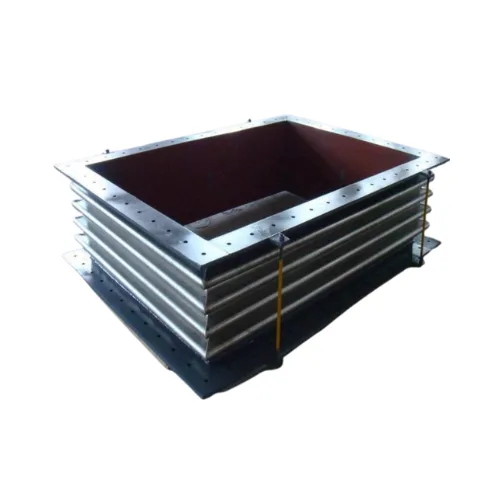
Product details & specifications
- Product type
- Rectangular expansion joint
- Manufacturer / model
- Awaiting confirmation
- Technical specification status
- Configuration-specific data required
Confirm size, configuration, quantity and availability with our team before ordering.
Technical information
Published external catalogue range — supplied variant unconfirmed
Form: Rectangular
Construction options: Fabric, rubber, PTFE or metal
Source-described purpose: Movement relief between rectangular duct sections
Historical application context: Ducting, HVAC, exhaust/flue-gas ducts and process-air handling
These external catalogue details are reference information. They do not establish the manufacturer, model, stock or ratings of the WH product.
General technical guidance
The following explains this component family; it is not a specification or approval of the supplied WH variant.
Rectangular construction choices
A rectangular joint can use a metal bellows or a fabric-based flexible element. For metal designs, corner geometry, convolution arrangement, frame and any flow liner form part of the engineered assembly. Confirm which construction is required before specifying a replacement.
Connection and movement selection
Record clear duct opening, frame dimensions, bolt-hole pattern, installed length and required axial/lateral movement. A rectangular outline alone does not establish interchangeability or the movement envelope.
Confirm before ordering
- Confirm the manufacturer and model or the applicable assembly drawing.
- Confirm nominal size, overall length and end-connection dimensions.
- Confirm the pressure–temperature operating envelope for the fluid and service conditions.
- Confirm axial, lateral and angular movement, cycle conditions and any simultaneous-movement limits.
- Confirm end type, size, material and the applicable flange or thread standard.
- Configuration: Construction and layer/material schedule; duct width × height (mm); corner radius (mm); frame/flange/bolt pattern; gas velocity and dust/condensate conditions.
- Use the confirmed manufacturer/model data for operating limits, compatibility and any required certification.
Related products
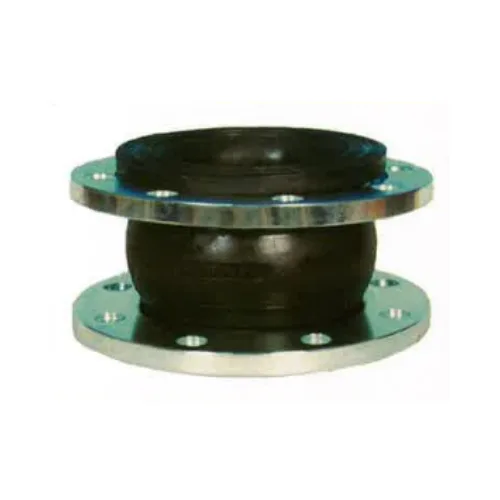
Rubber Single Sphere Joint
The single-sphere rubber bellow flexes between connected pipes, allowing movement and reducing transmitted vibration.
View product details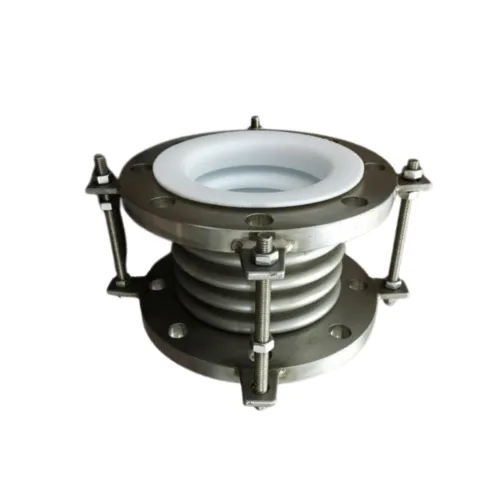
Teflon PTFE Expansion Joint
A PTFE expansion joint provides a non-metallic flexible connection for chemical-handling and clean-fluid piping.
View product details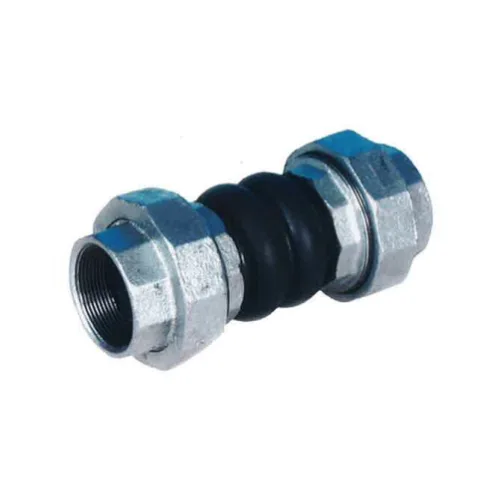
Rubber Union Flexible Joints
Union-ended rubber connectors provide a compact flexible link that can be disconnected for maintenance.
View product details
Rubber Expansion Joint
A fabric-reinforced rubber connector accommodates pipe movement and helps isolate vibration at piping and pump connections.
View product detailsInclude your application requirements.
Tell us the quantity, dimensions, connections and operating requirements where known. Include any testing or documentation you need confirmed.